

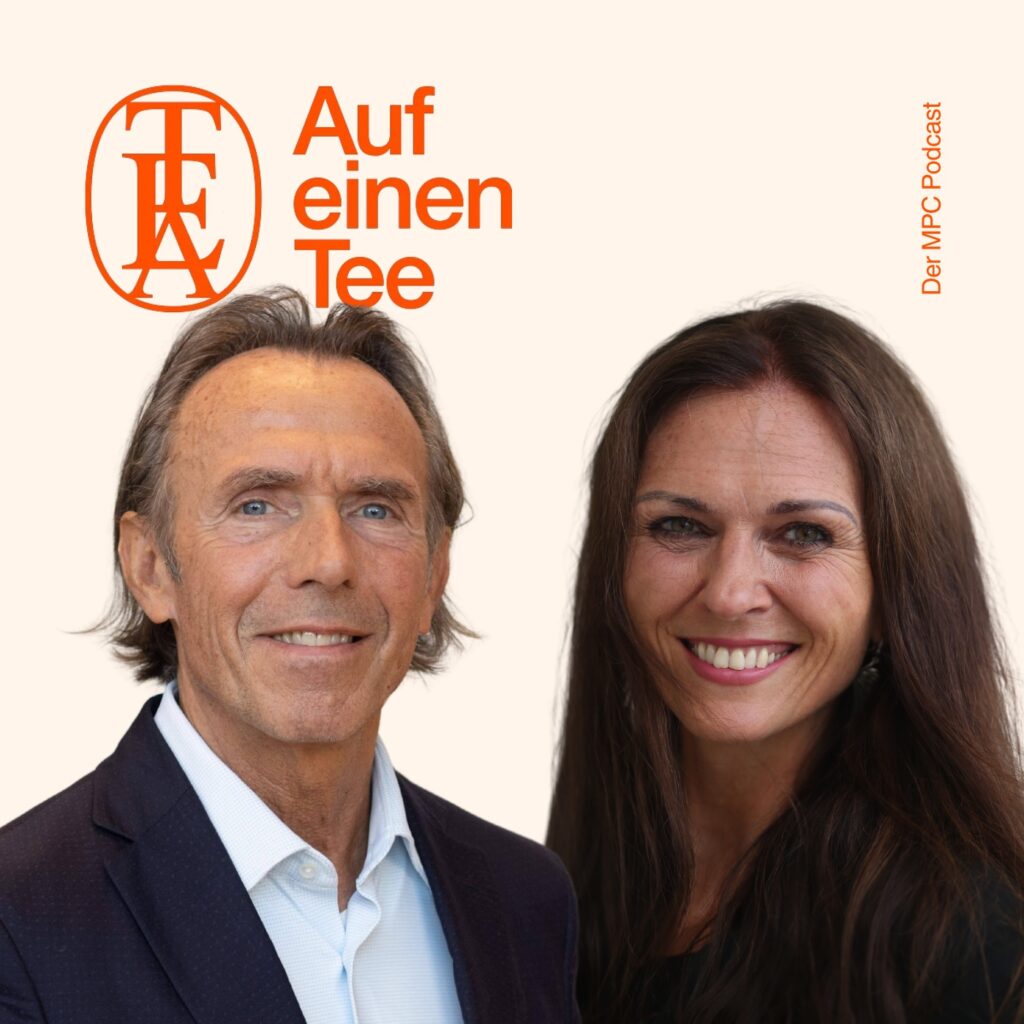
Companies have values. They formulate mission statements, commit to responsibility and sustainability, and describe how they want to treat one another. Is it all just for show, or do real actions follow? What actually happens when humanity clashes with efficiency, when a fair decision is more expensive, or when economic pressure mounts: What then becomes of ethical questions—and answers?
It is precisely these areas—where it often “hurts”—that Prof. Dr. Thomas Druyen addresses. The title of his new book speaks volumes: “The Return of Good: On the Power of Action in a World of Intentions.” The sociologist and futurist repeatedly poses an uncomfortable question: Why do we so often accept evil as reality—and treat goodness more as an ideal?
His answer to the question “What should we do?” is “Konkrethik.” According to Druyen, goodness must no longer be something we hope for, invoke, or write on (virtual) walls. It must be reflected in our actions. Or, as he puts it in his conversation with Andrea Montua: “Only action counts!”
He explicitly does not aim to do away with growth and competition. He wants to reorient them—and bring goodness itself into the competitive arena of action. Artificial intelligence plays a key role in this. Without it, says Druyen, it won’t work. It helps us recognize connections and alternatives. But: decision-making and responsibility remain in human hands.
His invitation: don’t dwell on things endlessly, but radically rethink your own future—and take action. A conversation that resonates, about values, responsibility, and the question of how we actually know how serious we really are about the good.
Click here for the podcast.
About Prof. Dr. Thomas Druyen
Prof. Dr. Thomas Druyen is a sociologist, author, institute founder, foundation president, and one of the leading public thinkers on wealth, the future, and mental agency in the German-speaking world. Since 2007, he has been a full professor at Sigmund Freud Private University in Vienna. There, he has headed the Institute for Comparative Wealth Culture and Wealth Psychology since 2009 and, since 2015, has also headed the Institute for Future Psychology and Future Management.
Various media outlets describe him as one of Europe’s most renowned wealth researchers. At the same time, through his research on wealth culture and the psychology of the future, he has shaped fields of thought that have brought his work to the attention of audiences far beyond the traditional academic world.